Sunday, 26 February 2023

Marie Antoinette


Marie Antoinette - La Reine rebelle // The Rebel Queen

Story  

Marie Antoinette is a princess of Austria and is to marry the Dauphin of France to unite both countries “prior to the Seven Years' War (1756-1763)” (Harrison W. Mark). She is stripped of her simple life and of everything belonging to that of Austria and is welcomed as the new potential queen of France. But she has trouble growing accustomed to the many rules as well as consummating her marriage with her husband and producing an heir. Even once this is achieved, she is not in the clear. She still struggles with the population of France seeing her as the root cause of their suffering vilifying her.  

Cinematography  

Mise-en-scène

Throughout the movie, there are many contrasting visuals, one at the beginning of the film. At the border of the two countries when she is to cross over to France, she is in her Austrian clothing which is baby blue, soft, natural look. But once she steps out onto France territory she is dressed up in a puffy, constricting, unnatural, and stark blue. Her hair is more white and extra extensions to exaggerate it. This fashion is her new norm to her husband and the royal court. Later in the film when Marie’s brother comes to visit her, he comments on her hair that is so tall. 

Her life is constrained to the high royalty lifestyle as a young teenager and thus she acts out with food, jewelry, and partying. This is shown with the director's choice of music and even in one scene there is the use of converse along with the other shoes. Given that in this era converse did not exist but they are strongly associated with teenagers.  

Further, Marie's long drawn-out scene where she is coming to France for the first time. She has a long scene of her walking up to her new house surrounded by people not talking but staring at her like some creature. She takes in everything. The new culture, new life, and as she looks around it makes the audience look around as well. The comparison is made even more unique as Marie first enters her room for the first time looking around and seeing everything that her new room has to offer. Which is covered in gold, white, and richness which is contrasted to the last scene in the house of the room destroyed because of the people's dissatisfaction with her. 

Cultural relevance  

 A scene done well is her laying her head down on the balcony when the mob came to their house. As they yell, she bows and places her head gently on the banister as a moment of silence paces through. Then the yelling continues in greater volume as she lifts her head and looks upon the angry mob. This is relevant because the director foreshadows what will happen to her. She will be executed. Despite her caring attitude that is shown throughout the film it was suspected that “Marie Antoinette was deliberately targeted in order to bind the French together in a kind of blood bond.” (Antonia Fraser)


Sunday, 12 February 2023

Skinamarink


 Story    

I watched Skinamarink and it's a different film than most. The movie starts out with two children waking up in the middle of the night to their father missing and any access to the outside world closed off. This movie then follows the very basic fear children have when they are left alone in a familiar yet different place. Skinamarink is based around the perspective of children and often we are limited to how they perceive what is happening and limitations as young kids of four and five.  


Cinematography    


 Skinamarink uses different angles in an analog horror genre retro style. So, the entire movie is in snap shots of the entire house. Most often the house is in darkness and so the film uses the camera to try to adjust to the dark to show the stifling feeling the children are feeling. If the house is not in darkness, it is in the harsh colors of pink or orange, but it is a dark harsh kind of light. There are scenes where the camera is in the viewpoint of the child and it's terrifying because we are in the same position as the child. Helpless and afraid. One Thing I noticed throughout the film is that the children used flashlights and I didn't understand why when they had electricity and could flip the light on. But the kids are too short to reach the light switch. And by watching it's more evident because they are so low to the ground.  

Further, they can't fully comprehend what is going on, just that something isn't right, so they watch cartoons during the film and sleep downstairs where it isn't scary. There are also many deeper meanings throughout the film that predict the end. One of them is the cartoons that the kids watch. It tells a lot of what will happen or has happened. Skidamarink is slow and methodical to demonstrate the feeling of fear. Because when we are scared it seems slower and the director exemplified this.  

Lasty, the audio was used as a tool to tell the story. The film is quiet and when there is noise it's in lower tones. The children whisper the entire film, the parents whisper, with the only outlier being the cartoons. But even then, it doesn't disrupt the overall blanket of fear and uneasiness over the film.  


Cultural relevance  


This is culturally relevant to all children in a way with the basic fear of being alone in the darkness and a child's outlook on everything. While this movie isn't for everyone, and a lot of the films have darker undertones, the film is unique in its attempt at a new kind of horror. 


Friday, 3 February 2023

Stanley Kubrick one-point perspective


Chapter 2 

    I watched Stanley Kubrick's use of the one-point perspective, and it frames the scene in the center. It draws all the attention to the center of the screen, usually down a hall, long passageway, or a room to emphasize the distance and openness of the room. Specifically, movies like The Shining (1980) where he used this method. It works well to show the creeping isolation the family is experiencing and the Eerie feeling of insanity. It holds the viewer hostage to where they can look. They are locked in and see what the director wants them to see. The slow movement of the camera to the center of the one-point perspective can be scary as we have no choice in the matter.  


    Further, another scene in The Shining (1980) when they are walking in the maze it has a feeling of claustrophobia because the walls of the maze are so close, and the point is the mother and son walking infinitely down the maze to an unknown point. This assists in the thematic intent that the director wants for us. The director's intent is to make us feel uneasy, stressed, and not in control in these scenes. Which works well in this movie's context because the movement is slow and deliberate following the characters.  


    Additionally, in this scene the one-point perspective Kubrick uses color. The color is the harsh dark green of the bushes of the maze in comparison to the mother's harsh vibrant red. It compliments in such a way that it draws the eyes. As well as making it feel as if they keep walking that the maze’s darkness is swallowing its new victims.  

Sunday, 29 January 2023

The Cabinet of Dr. Caligari (1920)

 The Cabinet of Dr. Caligari 

The story   
    The Cabinet of Dr. Caligari is about Francis and his friend Alan meeting a man named Caligari. Caligari shows off Cesare who can see the future and predicts that Alan will die. When this comes true, Cesare is suspected to have killed Alan for foretelling his death. The story then goes into whether he murdered Alan.

    Throughout the film they use expressionism with a bit of realism to tell the story. The story is strongly taken after WW1 with the fear, depression, and uncertainty for its inspiration. The perspective we are given is by a patient of an asylum. His worldview is distorted and dark thus we see this. By using dark colors and harsh makeup to accentuate their expressions and the use of shapes and small places to make it feel claustrophobic. This is seen in scenes by cutting the room in half and having different levels to depict depth in a weird way that is off putting.  

    The title cards are what gives us the dialogs in this silent film, but the music is what sets the tone for each scene. It flows with the movie well by increasing in scenes of stress. By the end of the movie, it shows the change in atmosphere caused by the environment becoming more fixed to reality with even shapes and normal proportions. Followed by brighter colors of yellow. The plot twist at the end closes the story by answering the question at the beginning of the movie.

Study Questions
- 1 & 2. How does the film tell its story? 
    It tells its story through the viewpoint of a man in an insane asylum.  
 
- 3. What conventions of cinematic storytelling does it use? 
    The frame story tells a flashback of what Francis' perception of reality is and expressionist architecture shows distortion all throughout the film. 
 
- 4 & 5. Explain the final "plot twist." and cinematic storytelling? 
    It was all a delusion that Francis had. They are inmates in an asylum and Dr. Caligari was the director. This is shown throughout the film's designs that show unproportional rooms, weirdly shaped windows, and old hallways. This shows the distortion/insanity of Francis.  

- 6 & 7. Early designs showed the creativity of early filmmaking and storytelling using surreal design.
    They did not have CGI, so the best was structuring the set to tell a story through action.  

- 8. How do the answers to questions 6 and 7 move us to contemplate the cultural relevance of this film? 
    The cultural relevance of this film is inspired by the post WW1 era in Germany.  

- 9. If you had to think about a more modern, 20th century film with traces to Caligari, what would they be? Why? 
    Movies inspired by Caligari are Tim Burton Scissorhands, Beetlejuice, and Corpse Bride. Because of the use of dark tones, funny/dark humor, and deeper meaning in the film

- 10. How do questions about the reliability of a narrator suggest meanings, cultural relevance, and the nature of film?
    It makes the viewer think of what the narrator is really trying to say in their film. It can help a viewer better understand or completely confuse them to make them second guess their understanding for a better conclusion on their part. 

Friday, 20 January 2023

Suspense (1913)


Suspense 1913

The story   

In the first opening scene it shows a woman, the housekeeper seeming distressed as she leaves a note and the key by the door. She takes one look out the keyhole of the room where Weber is left carrying for her child all by herself. This is emphasized by how small the keyhole is when it narrows down the field of view onto the lonely mother and her infant. As she leaves a man or tramp as they call him is outside looking in through the windows of the house. As he is searching for a way in, the mother sees the tramp. The fear both have is evident on their faces when they discover each other. It then cuts to a three-way split in the screen showing the tramp finding the key by the door, the wife frantically telling her husband he is breaking in, and the husband finally understanding. This scene leaves off showing that the tramp makes his way in and as the wife is giving updates the tramp cuts the telephone line. Thus, putting her husband in the dark. When the tramp makes his way in, he does not go for the wife, instead he goes for the food. Displaying that he is a human falling to his basic needs of sustainment.  


Meanwhile, the husband is speeding to get to his wife, and he is being chased by the police. It shows the police in the rear-view mirror gaining on him which emphasizes the stress the husband is under. The husband is so stressed looking back for the police that he hits a person on the road to his house. Further, the tramp is searching the house for valuables but makes his way to the wife's barricaded door. Here he breaks in and goes for the wife. The husband, still being chased by the police, makes his way into the house, and saves his wife. The police see the tramp and finally understand the full situation.  


Suspense shows the average life of most families then and today. The mother typically is the stay-at-home mother while the husband is the breadwinner and goes to work every day. This leaves the wife alone in the house to take care of their child. This film follows this and uses it to build the suspense of what if someone breaks in. Louis Weber builds the fear a mother would experience in this situation through the camera angles that are suffocating, the three-way split screen of events unfolding in real time, and the chase of getting home in time.


Saturday, 14 January 2023

Intro


     Hi, my name is Dakota Drew. I'm a sophomore from San Antonio Texas. I am also on the wrestling team, an Army cadet, and study Sociology. I came to North Central because of the great coaching staff and team. In my free time I like exploring new places outdoors like hiking and camping. I really like movies and I'm hoping to get a better understanding of scenes, plot, and the different ways of filmmaking! 

    I like mostly scary movies, but it is a struggle for me because a lot of horror films follow the same structure for jump scares and lead ups which are not scary or entertaining. I like good plots or ambiguity for these movies because the human mind can make it scarier when you let it wander. A few movies that I really like are So above, So below by John Erick Dowdle which has a pretty good plot. Another is Hereditary and Midsummer by Ari Aster, which both have good plots that doesn't give you all the answers in the first watch.   
 
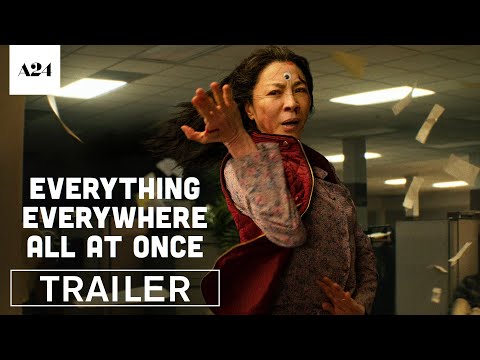
    A few movies I want to see are Avatar: The Way of the Water by James Cameron and Everything Everywhere All at once by Daniel Kwan. A movie I'm planning to watch now is Pulse (2001) by Kiyoshi Kurosawa which is a scary movie. Kurosawa also directed Seven Samurai which inspired the Magnificent Seven (1960). From what I have seen in trailers and reviews it's a slower paced movie with more emphasis on frames, interpretation, and symbolism. It tells its story through the lens of Japan's main issue of sadness and isolation for their population. 


Everything Everywhere All At Once

         Everything Everywhere All At Once is a film that was entertaining from start to finish. Outside of Swiss Army Man  I've never s...